Sunday, April 7, 2013

Item 40 of the Annex IV, deciduous, dormant plants : differing interpretations

The item 40 of the Annex IV says that deciduous trees and shrubs, intending for planting, other than seeds and plants in tissue culture, originating in third countries other than European and Mediterranean countries need and official statement that the plants are dormant and free from leaves.

But the so called deciduous plants are not identified by the Annex IV and the word " deciduous " gives rise to differing interpretations. A tree in its natural environment can be said non decideous or semi deciduous by a source ( phytosanitary employee, botanical encyclopedia ), and deciduous by an other; or some phytosanitary employees will consider that a distinction is to be made between nursery grown plants ( they won't lose their leaves ) and grown in nature.

The dormancy is also diversely interpreted. ( if a plant is reported to be deciduous but is keeping its leaves during the dry season when it is exported, is it dormant at the time it is exported ? )

When websites maintained by plant protection services exist that inform the public about their specific applications of regulations then differing interpretations are not a big problem; or when an import permit lists the practical conditions in which plants can be imported.

Plant importers in countries known to be linked to problems, such as France, should ask,  before the plants are imported, the phytosanitary office in charge : which items of the Annex IV apply and what are the practical interpretations regarding leaves, rooting etc.

This is how,  below, items were listed on the phytosanitary certificate of a shipment in March to France from Thailand :
FULFILS ITEMS 32.1 ( C ), 32.3 ( C ), 33, 36.1  ( C ) , 45.1 ( C ), AND 46 ( B ) ( C ) OF ANNEX IV AI OF PLANT HEALTH DIRECTIVE
plants were shipped in march, the dry season in which , if deciduous, plants lose their leaves
item 40 is not mentioned as the plants , seen with their leaves on at the time of the control by the phytosanitary office of Thailand the exporting country, were not considered dormant, hence not deciduous ;
Intercepted plants with leaves
In this shipment of 15 species only Aglaia Bauhinia Gardenia and Euclinia were intercepted in March 2013 by the french plant protection bureau while almost all the 11 non intercepted are reported semi deciduous or deciduous by some sources .. and the 4 intercepted are reported semi deciduous ! :

AGLAIA ODORATA, BAUHINIA SPP, BEAUMONTIA GRANDIFLORA, CINNAMOMUM ZEYLANICUM, EUCLINIA LONGIFLORA, GARDENIA SOOTEPENSIS, GARDENIA TUBIFERA, JATROPHA INTEGERRIMA, JATROPHA PODAGRICA, MICHELIA CHAMPACA
ODONTADENIA MACRANTHA, RUSSELIA EQUISETIFORMIS, STROPHANTHUS GRATUS, VALLARIS GLABRA, WRIGHTIA RELIGIOSA  

Hoya, Hoya seeds, Orchid seeds, Ferns, Fern spores and other plant collections are for sale on aleyagarden.com Plant care is available in various posts of this blog. Contact : aleyagarden@hotmail.com

Thursday, July 26, 2012

Blackmail, harrassment

At Aleyagarden why do you take pictures of the plants before packing them ?

Some buyers could believe that the plants were damaged or sick, errors could occur when making the parcels ( plants put into the wrong parcel ). In addition to the weight of the parcel, pictures are also convenient to evaluate the plant size. And for our information we keep a record of the confirmation of sending, which is particularly useful when our buyer has ordered envelopes without registration; finally pictures help us prevent defamation and blackmail online, they can even help turn in our favor such defamatory activities.

Usually the offenders are skilled enough in information technology to manipulate information online, by taking, by borrowing several identites and computer identities as well.

Here is an example involving a famous writer :

RJ Ellory, the bestselling British crime writer exposed for writing fake online
reviews lauding himself while criticising rivals, has engaged in the practice
for the past decade, he admitted today


On http://ezinearticles.com/?Should-Victims-of-Online-Reputation-Attacks-And-Online-Intimidation-Report-To-The-Police?&id=6077512 the author says :

" It is not unusual for IT skilled individuals to blackmail their victims by making threats to destroy their victim's reputation unless certain demands being met. " It is worthy to note that many people engaged in plant trade are former IT professionals. But as a matter of fact it is not even necessary to be particularly skilled in IT to use fake names and multiply computer identities ( change the IP addresses of the computer by using programs ).

The author cited above emphasizes that police services lack resources and knowkedge to recognise that online blackmail is a criminal offence, but note that " The civil courts however are much quicker to act in response to online harassment cases with injunctions being granted within days rather than months and years. "

Before resorting to court proceedings one should communicate with fellow sellers to whom different identities are suspicious and seem to hide a single person. If a real name and address are finally exposed ( these real name and address may be easier to catch than expected ) the offenders can face in turn public criticisim. But such criticisim from a panel of professionals or people exposing their identites will have more far-reaching consequences, the internet may also be a dangerous place for criminal offenders online.

Hoya and other plant collections are for sale on aleyagarden.com Plant care is available in various posts of this blog. Contact : aleyagarden@hotmail.com

Find all Aleyagarden posts on http://aleyagarden-blog.blogspot.com/

Monday, March 21, 2011

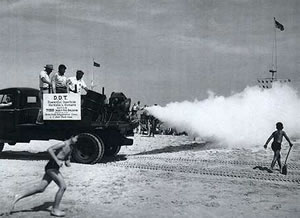
imidacloprid from Bayer, a pesticide used in Thailand by plant exporters


Under a EU rule for plant protection, the phytosanitary agents control each month that in Thai nurseries as of April 2011 no ornamental plants could be exported without having been treated by the pesticide imidacloprid from Bayer; this pesticide was created to fight white flies, such as tabacci in the genus Bemisia, that have an important role in the transmission of plant diseases causing economic losses estimated in the hundreds of millions of dollars.

However
imidacloprid, is an over the counter and commercial pesticide extremely toxic to the environment so France, Italy, Germany and Slovenia have banned uses of it within their borders following mass lethal effects on bee populations. Moreover this control of white flies is complex as they rapidly gain resistance to chemical pesticides. The USDA recommends "an integrated program that focuses on prevention and relies on cultural and biological control methods when possible."

Question :
imidacloprid ranks among Bayer´s best-selling insecticides ( in 2009 sales of imidacloprid were over € 600 million.) How to relate economic losses from plant diseases driven by white flies and sales of imidacloprid, that are also losses in the final buyers' accounts ? Needless to say, if 1 $ of crop loss is balanced by 1 $ of imidacloprid cost to the grower the global gain, from a pure accounting perspective, is 0. And the figure for the environment and human health is by far negative

Moreover
imidacloprid is know to induce the reproduction of acarians.

Taking in account environmental effects of this pesticide, white flies resistance and the fact that lethal diseases can incur from undetected long term chemical exposure, by far better options than the use of this product would consist in the governmental supports of biological control methods, financial support to farms that lost crops or compulsory insurance.

In Thailand a financial assistance to farms that suffered loss from floods already exists. Fortunately this assistance doesn't poison our planet. Loss incurred by floods are certainly much higher than those incurred by
white flies borne pathogens.

Hoya and other plant collections are for sale on aleyagarden.com Plant care is available in various posts of this blog. Contact : aleyagarden@hotmail.com
Find all Aleyagarden posts on http://aleyagarden-blog.blogspot.com


resources on imidacloprid :

http://en.wikipedia.org/wiki/Imidaclopridhttp://en.wikipedia.org/wiki/Imidacloprid_effects_on_bee_population
http://www.indymedia.org.uk/en/2010/11/467782.html
http://beeandgarden.com/?p=68

Hoya and other plant collections are for sale on aleyagarden.com Plant care is available in various posts of this blog. Contact : aleyagarden@hotmail.com